


A simple follow-up checklist for clinic enquiries

Give a clinic enquiry a named owner, a specific next action and a due time. Those three details tell a colleague what needs to happen when they pick up the conversation.
Use this checklist for administrative questions about first consultations, service packages and appointment arrangements. It fits an existing CRM or a shared enquiry register.
Start with this checklist
- Find the original enquiry and check whether someone has already replied.
- Name the person responsible and arrange cover for an absence.
- Write the next action clearly, such as “send available consultation times”.
- Set the date and time that action is due, following your clinic's agreed process.
- Record what happened after the action. If you are waiting for a reply, set a separate time to review the enquiry.
- Leave a short handover note when responsibility changes.
An agreed enquiry follow-up process gives the people answering messages a shared way to keep these details current.
Copy this six-field record
Keep the record beside the original message so colleagues can find the context.
| Field | What to enter |
|---|---|
| Enquiry | Received date, a link to the message and a brief note of the administrative request. |
| Owner | The person responsible, with cover arranged if needed. |
| Next action | The specific step that moves the enquiry forward. |
| Action due | The date and time that step should be completed. |
| Status and review | Open, waiting for reply or closed; add a review time while waiting. |
| Latest action or handover | What happened, what remains and who has accepted responsibility. |
Work through a consultation enquiry
Consider a prospective client who emails to ask about a first consultation and what a clinic package includes. The front-desk coordinator takes ownership, checks the approved package information and confirms which consultation times can be offered.
The next action is “send the package information and available consultation times”, with a due time agreed through the clinic's normal process. A useful response gives the enquirer something specific to consider or answer. An acknowledgement can confirm receipt while that information is being checked.
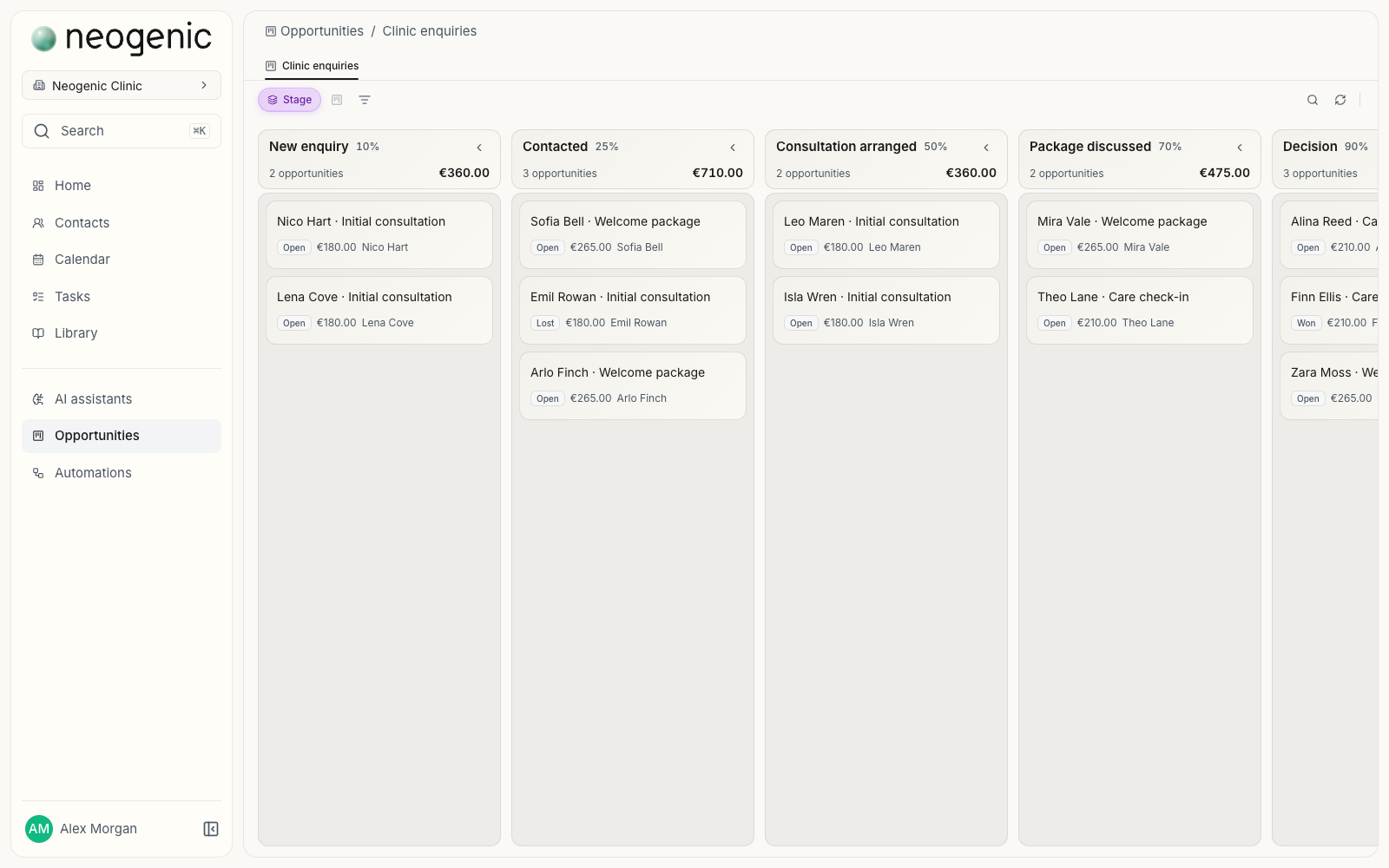
After sending the details, the coordinator records the response, marks the enquiry as waiting for reply and sets a review time. The same distinction belongs in the sales pipeline: an offered consultation time becomes confirmed only when the booking has actually been agreed.
Separate action deadlines from review times
An action is overdue when its agreed due time has passed and it remains unfinished. The review time serves a different purpose: deciding what to do next while you wait for the enquirer.
When the review time arrives, check for a reply and decide whether to follow up, keep waiting or close the enquiry with a recorded reason. Continued waiting does not make a completed response overdue. Any new action needs its own owner and due time.
Make the handover easy to continue
Leave a short note in this order:
- The request
- The latest action
- The outstanding question
- The next step and its due time
Ask the receiving colleague to acknowledge the handover. If they are unavailable, arrange another owner through the team's usual process. A brief conversation helps when the request is unclear; record the decision so the next person can find it.
Review a few counts each week
Check how many enquiries remain open, lack an owner, have unfinished overdue actions or are waiting for a scheduled review. Keep waiting enquiries separate from missed work. Look at the records behind the counts and agree what needs attention.
If you are evaluating software to support this process, use our clinic software buying guide to test it in a demonstration.